
The Legacy Giving Rethink, Part 3: The Generation Nobody Is Asking
April 9, 2026
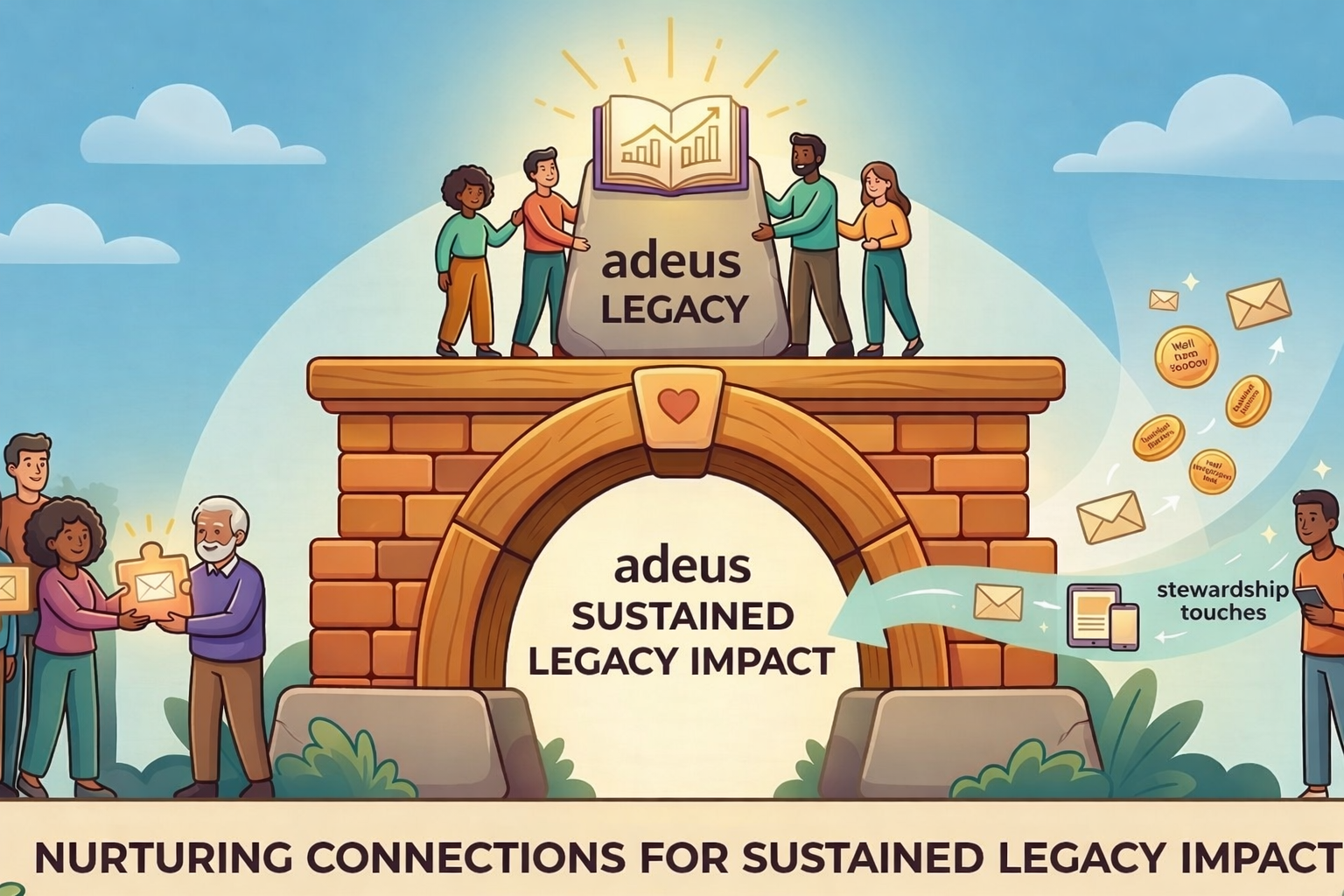
The Legacy Giving Rethink, Part 3:The Generation Nobody Is Asking
In the first two articles in this series, we covered the structural foundations every legacy programme needs before going public — governance, gift acceptance policies, and legal readiness — and the communications and stewardship approach that turns a one-time intention into a lasting commitment.
In this third and final instalment, we turn to an assumption sitting at the heart of almost every legacy programme in existence. Schools and universities sit on an asset most charities would envy — a lifelong sense of belonging — yet most are systematically overlooking the donors most likely to shape their legacy income over the next thirty years.
Alumni and parents often carry a connection to these institutions for decades. Yet in many development offices, legacy giving (bequest fundraising) competes with urgent priorities capital campaigns and annual funds, so it is often quietly positioned rather than consistently visible.
The biggest mistake is assuming legacy giving is exclusively an “older alumni” conversation. By focusing only on the over-70s, institutions under-invest in the “Future Legators”.
The rising opportunity in younger demographics
Recent data suggests the “younger” legacy market is already primed:
- 44% of Millennials and Gen X have already considered donating through their Will.
- The “Will Gap” is real: 87% of Millennials, 70% of Gen X, and 53% of those aged 50 to 64 do not yet have a valid Will.
- Awareness is thin: 30% of supporters say they have never seen a legacy communication from an organisation they support.
So the challenge for schools and universities is not “convincing” people to care. It is meeting existing intent with a credible, low-friction online Will-writing route.
Who are the 'younger' legacy prospects?
In the education sector, your prime prospects are often in their “building” years:
- Parents (ages 35 to 55): focused on family security, long-term planning, and passing on values.
- Mid-career alumni (ages 30 to 55): navigating life admin milestones like buying a home or starting a family.
- Former staff: people whose careers were shaped by the institution and who feel genuine mission alignment.
Our survey of IDPE-affiliated schools reinforces this in an education-specific way: 92% of schools report undisclosed legacies, and over half have received gifts from supporters under 35.
'The intent exists. The infrastructure to capture it often does not.'
Three reasons institutions miss younger legators
- Alienating messaging
If your imagery and language focus solely on retirement, younger supporters will self-select out. They will assume it is not for them. This does not require a radical tone shift, just a broader frame that speaks to planning, family, and values, not age. - High-friction journeys
Telling a 40-year-old to “speak to a solicitor” is a major hurdle. It is not wrong, it is just an easy place for intent to die. The YouGov/WPNC research found 36% of donors say they would use a charity Will-writing service if they knew it existed. That is effectively demand for a simpler route that still feels credible and compliant. - The notification gap
Research from Remember A Charity shows 67% of people who pledge a gift never tell the organisation. Schools and universities often talk about legacies less openly than charities, so even when someone includes you in their Will, they may not realise you would want to know, or how to tell you. Without a simple way to notify you, you lose the chance to steward the relationship.
Timing is everything: capitalising on life triggers
Younger audiences do not write Wills because of their age. They write Wills because of life triggers.
Education-specific hooks include:
- Reunion years: 10, 20, and 25-year milestones.
- Family milestones: the birth of a first child, or the “we should get organised” moment.
- House purchase: Wills come up alongside insurance and other planning.
- Bursary storytelling: framing legacy gifts as “paying it forward” for the next generation.
- Staff transitions: the retirement or departure of a long-serving, beloved teacher.
- Institutional moments: centenaries, major projects, and big community touch-points.
If your legacy giving activity is not tied to moments like these, you are relying on luck.
Best practices for education legacy programmes
Lead with planning, not philanthropy
For younger audiences, “legacy” is rarely the headline. “Getting organised”, “protecting your family”, and “making your wishes clear” lands better. The legacy prompt should come as the natural second step once family is secure.
Make Will-writing easy
If a large portion of your community does not have a Will, you have an upstream participation problem. Reduce friction with a co-branded, digital-first Will-writing journey that feels like a trusted extension of your institution, not a random third-party link or codicils that feel complicated.
Establish a Legacy Circle
Create a tasteful way to recognise commitment, including for supporters who wish to remain anonymous. A Legacy Circle is not about perks. It is about gratitude, belonging, and giving people a reason to raise their hand.
Keep a consistent cadence
Do not blast your whole database with generic legacy messaging. Pick a demographic (for example, alumni aged 35 to 45, or parents aged 40 to 55) and show up twice a year with a mix of planning-led and impact-led content. Consistency beats novelty. A simple rhythm often outperforms a grand “legacy launch”.
Where adeus fits
Most legacy content aimed at education is generic charity guidance. adeus is already operating with leading independent schools, which is why we focus on what actually matters in this sector: brand sensitivity, alumni etiquette, and practical stewardship workload.
In practice, adeus provides:
- Co-branded, digital-first Will-writing journey designed to reduce friction for younger audiences.
- Campaign support aligned to your calendar moments (reunions, bursaries, anniversaries, staff milestones).
- Know Your Donor reporting to help you recognise stewarding opportunities over time and evidence progress internally.
A simple next step for next term
If you want progress without adding complexity:
- Introduce a Legacy Circle approach for those who want to be thanked.
- Choose one priority demographic.
- Pick two trigger moments in your calendar.
- Launch a co-branded Will-writing journey with adeus.
- Measure what matters: notifications and stewardship opportunities, not just clicks.
Book a demo with adeus to see how we can help you build a legacy programme that compounds for years to come.
Find out more
This is the final article in a three part series:
Part 1: Why Most Programmes Fail Before They Start
Part 2: The Art of the Long Game
Contributed by Jonathan Ng
As Head of Partnerships at adeus, Jonathan works with schools and other institutions to build and grow legacy giving programmes through a modern, digital-first approach. He leads partner relationships from early conversations through to campaign launch, helping organisations shape the right strategy, messaging, and supporter journey. Outside of work, he is a dad, which gives him a personal appreciation for legacy, family, and planning for the future.
___
Online will writing and gifts in wills
adeus runs a legacy giving programme for independent schools, charities and foundations. The organisation pays for supporters' online will writing, and supporters decide freely whether to leave a gift. Those gifts become legacy income, directed towards bursaries, capital projects and the organisation's mission. To see how it could work for you, email talktome@adeus.life.


